


Speakers
The speakers for the FRH Biennial Conference 2026 “The time is now: How to future-proof religious heritage together are confirmed!
SUB-THEME 1 | From community-based to holistic: Different approaches to future-proofing religious heritage
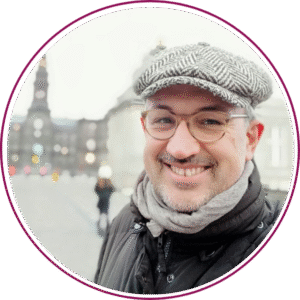 Luigi Bartolomei
Researcher at the University of Bologna and director of the Cherubino Ghirardacci Centre for Studies
Keynote speaker. Luigi Bartolomei, PhD in Architectural Composition (2008), is a researcher focused on the management and adaptive reuse of ecclesiastical heritage. Since 2016, he has coordinated conferences and training programs on the future of redundant religious assets, including the first Italian summer school dedicated to the reuse of buildings owned by communities of consecrated life. His studies have been presented at international venues such as the Liturgical Conference in Bose and “A Living Presence” in Washington DC. He is a consultant for the National Office for Cultural Heritage of the Italian Episcopal Conference (CEI) and served on the promoting committee for the Holy See’s 2022 conference “Charism and Creativity.” He currently teaches “Religious Cultural Heritage” and is the Editor-in-Chief of the Scopus-indexed journal IN_BO. Since 2013, he has been a member of the editorial board of Il Giornale dell’Architettura.
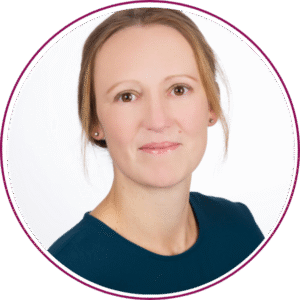
Manuela Klauser
Research associate of the TRANSARA project at the University of Bonn
Dr. Manuela Klauser is art historian with a doctorate and experienced in freelance project work. Since 2022, she has been a research associate in the DFG research unit FOR 2733 “Transformation of Sacred Space: Function and Use of Religious Places in Germany”, project 1: Exemplary case studies on the transformation of sacred spaces in the Aachen area. Her research areas include architectural history of modern church buildings and their close connection to liturgical history as well as their link to architectural theory and architectural sociology.
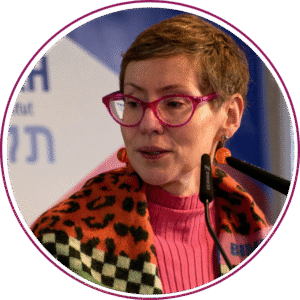 Dani Kranz
Coordinator of research at the Tikvah Institut in Berlin
Dani Kranz is the coordinator of research of Tikvah Institut, Berlin, director of Two Foxes Consulting, Germany and Israel. She is a consultant to the high commissioner of the German government for Jewish life and in the fight against antisemitism, as well as to a range of other foundations, museums, and NGOs. She is the president of Präsenzen – Netzwerk jüdische Gegenwartsforschung e. V. (Presences – Network for the Research on Contemporary Jewry); a board member of the Association for the Social Scientific Jewry (ASSJ) as well as a founding member of the Network of Jewish University Teachers (Netzwerk jüdischer Hochschullehrender, NJH). Her expertise covers migration, integration, ethnicity, law, state/stateliness, political life, organisations, memory cultures and politics as well as cultural heritage and allosemitism in the shape of antisemitism and philosemitism.
 Karim Ettourki
Consultant of the KADOC Public Services and Sharing Expertise department
Karim Ettourki holds an MA in Oriental Languages and Cultures from Ghent University. Between 2008 and 2013, he was affiliated with the research department of KADOC, the Documentation and Research Centre for Religion, Culture and Society at KU Leuven. From 2013 to 2023, he served as a part-time consultant for the heritage of cultural minorities at KADOC-KU Leuven. Concurrently, he held a part-time position at Archiefpunt, a network organisation representing predominantly private archival institutions in Flanders. Since 2023, he has been a full-time consultant within the KADOC Public Services and Sharing Expertise department. In this capacity, he contributes to the development and support of projects aimed at safeguarding, documenting, and valorising cultural heritage, with particular attention to community engagement and inclusive heritage practices.
 Hajar El Hadji
Policy Officer at EMPACT
Hajar El Hadji has a Bachelor in Family Science from the University of Brussels. Currently, she is active at Empact as a policy officer and at ’Nuff Said as a community builder. Her work focuses on super-diversity, racism and discrimination, intersectionality, and the empowerment of migrantised communities. Previously, she worked at GATAM and the Red Cross Flanders, where she gained experience in international cooperation, community development, migration, and social inequality.
SUB-THEME 2 | Policies and Instruments: Good Practices Across Europe
 Joanna de Haas van Dorsser
Real Estate Director at the Diocese of Paris
Keynote speaker. Joanna de Haas van Dorsser serves as the Directeur du Patrimoine Immobilier (Real Estate and Heritage Director) for the Diocèse de Paris. In this role, she oversees the extensive property portfolio, strategic developments, and historical real estate assets owned and operated by the Catholic Church across Paris.
 Sara Vermeulen
Policy Officer at the Flanders Heritage Agency
Sara Vermeulen studied architecture and art history at KU Leuven and La Sorbonne in Paris. Since 2013, she has been part of the policy team of the Flanders Heritage Agency. In this capacity, she was a member of the steering committee of the Project Bureau for the Repurposing of Churches (2016-2021) and currently sits on the steering committee of the ‘Platform Toekomst Parochiekerken’ (Future of Parish Churches Platform) (2023-2027).
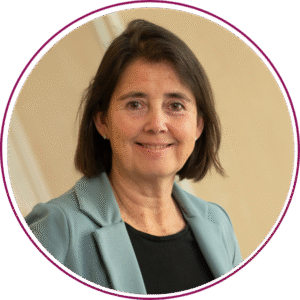 Judith Toebast
Programme manager of the Future of Religious Heritage Program at the Cultural Heritage Agency of the Netherlands
Since 2022, Judith Toebast has been program manager of the Future of Religious Heritage Program at the Cultural Heritage Agency of the Netherlands, part of the Ministry of Education, Culture and Science. The program is a collaborative program involving various government bodies, owners of places of worship, and representatives of heritage and civil society organisations. After studying Architecture, specialising in repurposing and renovation, at Eindhoven University of Technology, she immersed herself in rural architecture – historic farmhouses. From 2007 to 2022, she worked as a specialist in rural architecture at the same organisation until she made the switch to religious heritage.
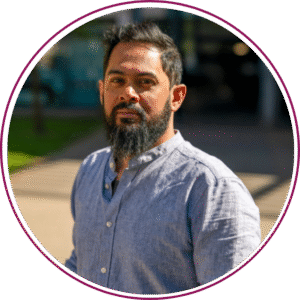 Abdul-Azim Ahmed
Deputy Director of the Islam-UK Centre at Cardiff University
Dr Abdul-Azim Ahmed is a sociologist and lecturer in British Muslim studies. He is the Deputy Director of the Islam-UK Centre at Cardiff University, where he is part of an interdisciplinary team researching contemporary Islam. He is also Secretary General of the Muslim Council of Wales, working with Muslim collectives and charities in Wales in pursuit of the common good. His first work, The Contemporary British Mosque, explored the growth and significance of Muslim religious institutions. In 2026, he published Muslim Wales – A History in 9 Places that documented the story of Muslims in Wales.








Follow us: