


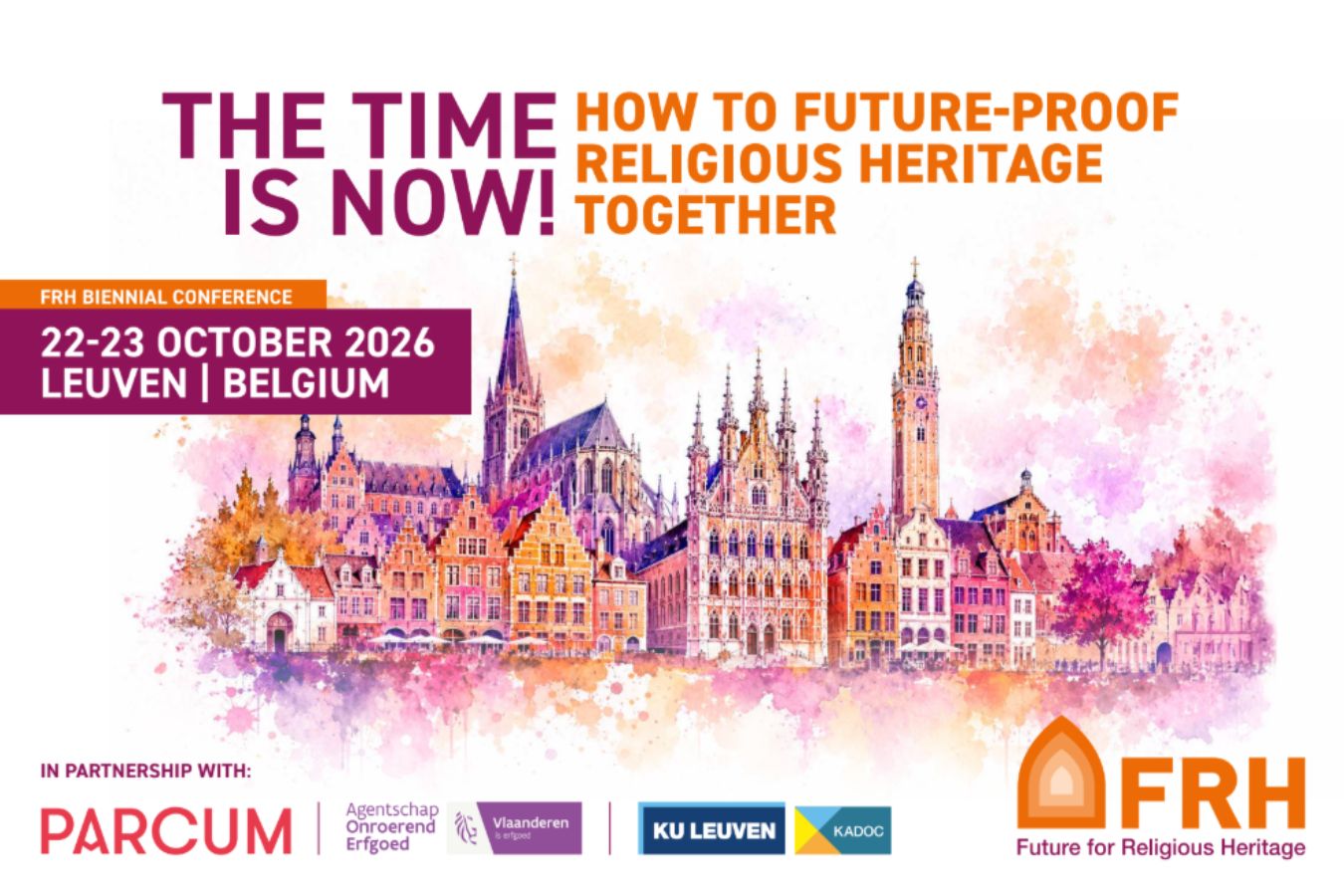
The FRH Biennial Conference, “The time is now: How to future-proof religious heritage together” will take place from 22–23 October in Leuven, Belgium. Join us as we explore innovative integrated models, regulatory frameworks and instruments that are already making a difference and inspiring new collaborations to ensure that religious heritage remains relevant and resilient in a rapidly changing world.
Programme & themes
This year’s programme combines two mornings of expert presentations with an afternoon of interactive study visits and an afternoon of participatory workshops, offering opportunities not only to learn from presentations about leading practices and policies across Europe, but also to engage in guided discussions with other participants.
The presentations, visits and workshops are divided into two sub-themes:
- From community-based to holistic: Different approaches to future-proofing religious heritage. Religious heritage sites are much more than historic buildings. Their future depends on recognising their interconnections with social, cultural, environmental, and economic factors. This theme explores a range of management approaches currently being implemented across Europe, with particular attention to community-led initiatives, participatory governance models, and innovative forms of local stewardship.
- Good Practices Across Europe: Policies and instruments. The effective management, reuse, and revitalisation of religious heritage requires supportive policies, legal frameworks, financial mechanisms, and governance structures. This theme highlights regional, national, and European policy contexts and instruments that are shaping the future of religious heritage, showcasing concrete examples that support its sustainable management and revalorisation.
Speakers
Discover the inspiring voices and experts joining us. Check the full speaker line-up here.
Posters
Check out the revitalisation projects from across Europe featured in the posters of our exhibition here.
Study visits
The study visits will offer participants first-hand insight into the Flemish approach to religious heritage. These include the Paul van Ostaijen Cultural Centre in Heverlee -a repurposed site turned into a carbon-neutral multifunctional space- as well as two churches of the municipality of Boutersem, which is currently developing a strategic plan for the future of its parish churches. We will end our tour at the Vlierbeek Abbye, followed by our conference dinner.
Venue
With its rich religious heritage and renowned academic tradition, Leuven provides an ideal setting for discussions on the future of Europe’s places of worship. The city is actively exploring ways to preserve its churches, monasteries, chapels, and collections while ensuring they remain relevant and accessible to contemporary society. Our venue will be the Irish College Leuven, a historic institution founded in the seventeenth century that continues to serve as a vibrant centre for education, culture, and dialogue.
__________________________________________________________________________________________________________________
This conference is organised in partnership with the Flanders Heritage Agency, which protects immovable heritage, supports its conservation and carries out policy-oriented research in Flanders; PARCUM, a Flemish Government recognised museum and centre of expertise for religious art and culture; and KADOC-KU Leuven, an interfaculty centre for the documentation and research of religion, culture and society.








Follow us: