


Long before religious heritage appears in a classroom syllabus, it has already entered a child’s imagination.
It begins at home. Through family rituals, festivals, stories of ancestors, visits to temples, churches, mosques, shrines, or cemeteries, children encounter heritage as something lived rather than labelled. A grandmother explaining why a candle is lit a certain way, a parent narrating the history of a local shrine, or the annual rhythm of religious festivals, all quietly embed an understanding that the past survives in spaces, objects, and practices.
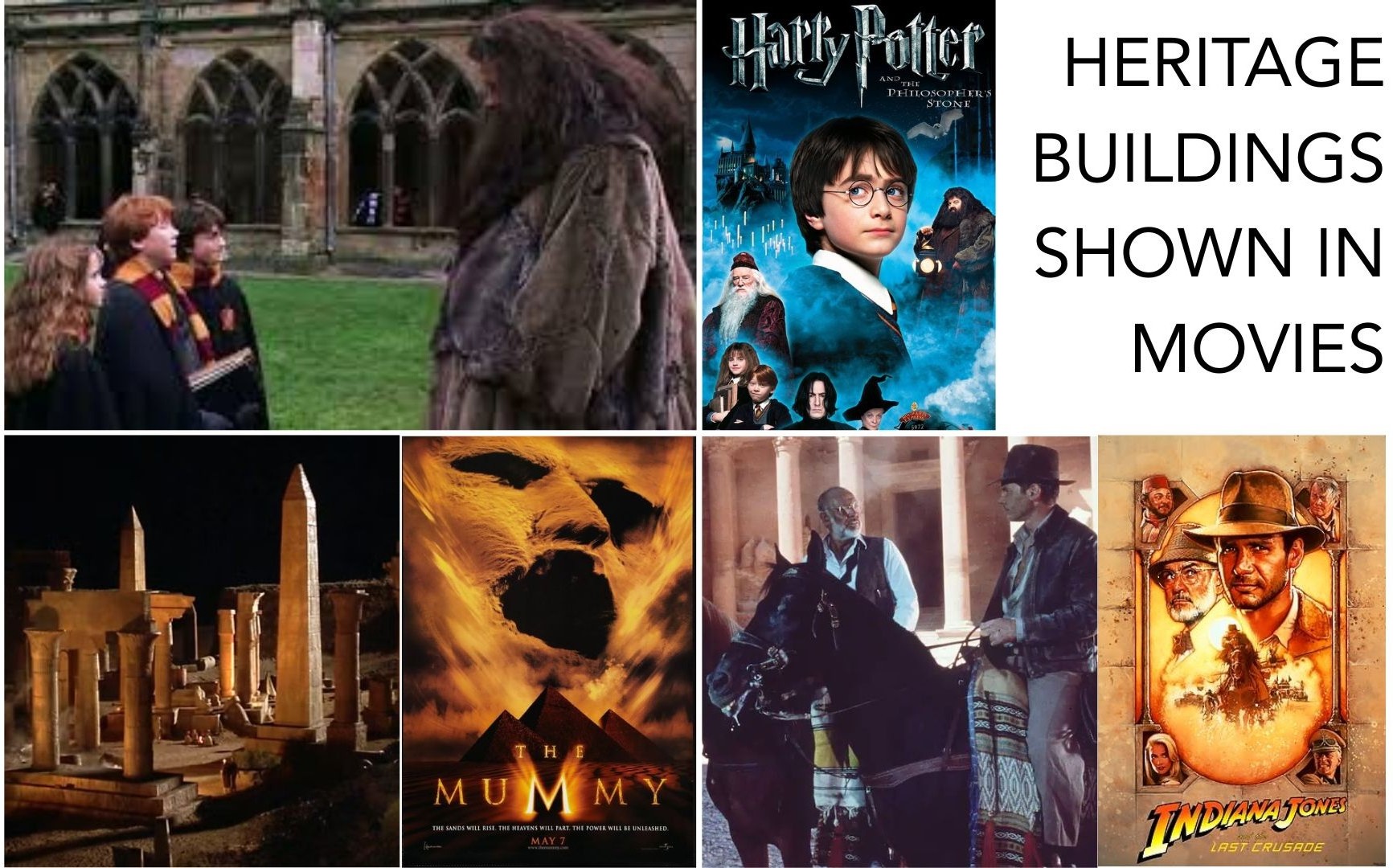
But heritage also arrives through cinema screens and television sets. For many children, curiosity about the past is sparked not by textbooks but by adventure. Indiana Jones running through ancient temples, The Mummy awakening a lost civilisation, or National Treasure decoding secrets hidden in monuments frame heritage as mystery, danger, discovery, and possibility. The Harry Potter films, with their soaring cathedral-like halls, cloisters, and Gothic corridors, many filmed in historic religious settings such as Durham Cathedral, quietly familiarise young audiences with sacred architecture, even when presented within fantasy. Even when exaggerated or fictionalised, these films cultivate fascination with ruins, manuscripts, sacred artefacts, and historic architecture. The child may not yet distinguish between archaeology and myth, but a seed is planted: old places matter.
Travel films, fantasy series, and even horror genres contribute in subtler ways. Gothic cathedrals, abandoned monasteries, desert shrines, and ancient burial sites become atmospheric backdrops. These settings shape emotional responses: wonder, reverence, intrigue, long before children encounter formal definitions of “religious heritage.” Popular media thus acts as an informal pedagogical space, framing heritage as culturally powerful and narratively rich.
Beyond screens, the built environment itself becomes a silent teacher. Many children grow up in towns where heritage buildings, administrative halls, churches, synagogues, mosques, memorials, and monasteries form part of everyday scenery. They pass them on the way to school without necessarily knowing their history. Yet the architectural presence registers. These structures anchor identity and continuity within the urban landscape. In some cases, this fascination transforms into active engagement: the detailed LEGO® rebuild of Durham Cathedral, completed with the final piece placed by 11-year-old Libby Armstrong from Beverley in East Yorkshire is a striking example of how young minds look at the creative side of religious heritage, turning admiration into tangible reconstruction. Same goes with them playing videogames like Assassin’s Creed or Minecraft.
School trips often provide the first structured encounter. Visits to cathedrals, museums, pilgrimage routes, historic cemeteries, or local heritage centres translate abstract history into physical experience. Standing inside a vaulted nave or tracing carvings on an ancient doorway creates a sensory connection that no slideshow can replicate. These moments can transform passive familiarity into active curiosity.
However, this early exposure is rarely framed explicitly as “heritage education.” It is incidental, experiential, and emotionally mediated. Popular culture may romanticise or distort; family narratives may be selective; school visits may lack deeper context. Yet together, they form a layered introduction to religious heritage long before academic pathways emerge.
Understanding these early encounters is crucial. If curiosity about heritage begins in living rooms, cinemas, streetscapes, and school excursions, then formal education should build on this foundation rather than ignore it. Religious heritage is not first encountered as theory; it is encountered as story, space, and experience. Recognising this continuum allows educators to bridge imagination with critical understanding, transforming childhood fascination into informed engagement.
By Samidha Pusalkar, chair of the FRH Young Professionals and Researchers Working Group








Follow us: