



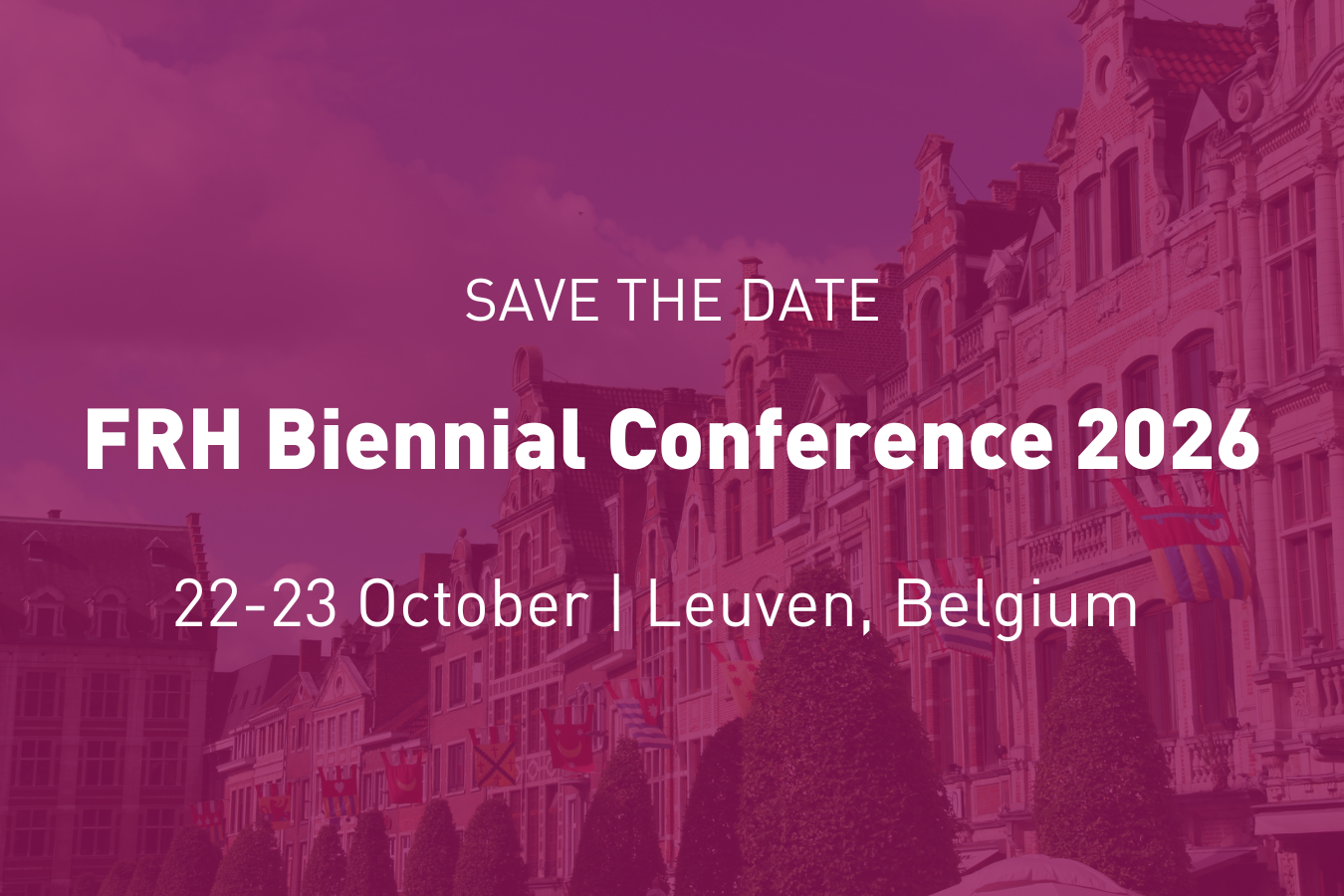
Future for Religious Heritage (FRH) is delighted to launch the Call for Papers to participate in the FRH Biennial Conference 2026 ‘The time is now: How to future-proof religious heritage” which will take place in Leuven, Belgium on 22-23 October. The Call for Papers will close on Friday 15 May 2026 at 12:00 CET.
Conference aim and themes
Our 2026 conference will explore new paths for the future of Europe’s religious heritage, focusing on how a holistic approach and policy frameworks can help ensure that religious heritage remains relevant, resilient, and accessible for generations to come.
- From community-based to holistic: Different approaches to future-proofing religious heritage. Religious heritage sites are not merely architectural monuments; they are part of broader cultural, social, ecological and economic ecosystems. A holistic approach should address these interconnections and move beyond mere conservation towards an integrated, long-term strategy. This perspective is becoming increasingly essential as heritage professionals respond to the challenges of climate change, resource constraints and the need for multifunctional uses of historic spaces. Special attention will be paid to submissions about community-based approaches, including innovative solutions rooted in the local context, and new participatory models that are redefining the way heritage is managed and experienced across Europe.
- Policies and tools: The effective management, reuse and revitalisation of religious heritage depends on supportive policy frameworks and practical tools. At regional, national, and European levels, a wide range of instruments (legal, financial, and strategic) are being developed to address the challenges of conservation and adaptive reuse. However, gaps and inconsistencies remain. By examining existing policies, sharing best practices, and identifying opportunities for improvement, our conference aims to advance more coherent and impactful approaches to safeguarding and revalorising religious heritage.
Who should apply
This call is open to a diverse range of profiles engaged in the study, management, and revitalisation of religious heritage across Europe including:
- Researchers in relevant fields such as heritage studies, architecture, urban planning, social sciences, theology, and other related disciplines, presenting original research or theoretical perspectives.
- Heritage practitioners and professionals, including architects, conservators, restorers, site managers, urban planners, and cultural heritage consultants, who share practical experiences, methodologies, and lessons learned from past or ongoing projects.
- Civil society organisations, NGOs and community groups involved in the stewardship, reuse, or revitalisation of religious heritage sites, especially those implementing participatory or community-based initiatives.
- Early-career professionals and researchers, whose contributions bring fresh perspectives, emerging research, or experimental approaches to the field.
Submissions may include research papers, case studies, project presentations, or policy analyses, provided they relate to one of the conference themes.
Submission guidelines
- Abstracts must have a maximum of 200 words
- They may include up to two illustrations
- They must be in English
- They must be submitted as a PDF or Word file
- Indicate some information on the proposer: (representing an) institution or individual, academic or professional. This information is out of the 200 words from the abstract.
- Proposals must discuss finished or advanced projects, not preliminary findings, teaching exercises, student projects, etc.
- Abstracts must be submitted through this form: https://forms.gle/S48g219niVCqNDG7A
- The deadline is 15 May 2026 at 12:00 CET
Selection process
The FRH Scientific Advisory Committee will review all submissions and invite the best 16 abstracts (8 in each topic) to produce a poster. Out of these 16 selected abstracts, 2 will be invited for a 10-minute presentation in addition to the poster. Authors/presenters will be notified whether they have been successful or not in the first week of June.
Timeline
- Communication of results: first week of June
- Authors’ acceptance: until first week of July
- Deadline for the poster submission (in this case, we have to define specific layout for the poster, e.g., dimensions, orientation, probably words dimension, etc…): mid-September
For questions or additional information, please contact us at members@frh.org
We look forward to receiving your contributions and to welcoming you in Belgium!








Follow us: