


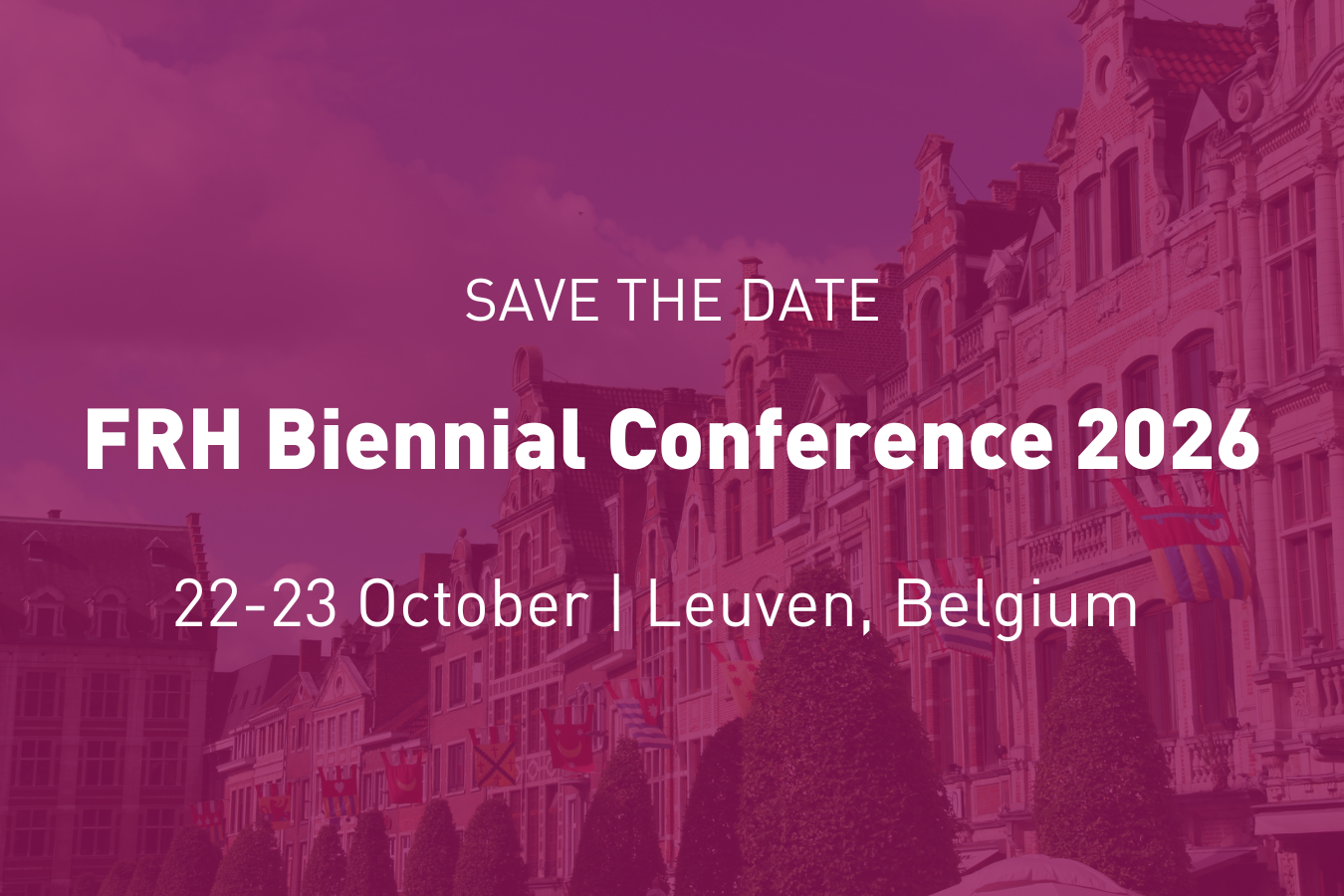
The FRH Biennial Conference 2026 will take place on 22–23 October in Leuven, Belgium. Known for its vibrant academic tradition, Leuven is actively exploring solutions not only to preserve its churches, monasteries, chapels, and collections, but to keep them meaningful and alive. This scenario will offer an inspiring backdrop for conversations among heritage professionals, policymakers, and heritage enthusiasts from across Europe.
Our 2026 conference will explore new paths for the future of Europe’s religious heritage, focusing on how collaborative action and a holistic and integrated management can help ensure that religious heritage remains relevant, resilient, and accessible for generations to come. The programme will revolve around three interconnected sub-themes:
- Stones, Things, Uses: The holistic approach. Religious heritage sites are not merely architectural monuments; they are part of broader cultural, social, ecological and economic ecosystems. Religious heritage management requires an integrated understanding of these many layers and interconnections. This sub-theme will focus on showcasing holistic approaches that demonstrate how considering the ecosystem as a whole can lead to more sustainable, resilient and future-oriented management of historic places of worship across Europe.
- To Whom It May Concern: The community-driven approach. The future of religious heritage lies with the communities that give meaning to these places. Broaden participation in decision making processes about the present and future of religious heritage is no longer an option, but is essential to ensuring relevance, legitimacy and long-term sustainability. This sub-theme will focus on how local communities in Flanders and across Europe are being empowered through emerging participatory models that are redefining the way heritage is managed and experienced across regions.
- Good Practices Across Europe: Policies and instruments. The effective management, reuse and revitalisation of religious heritage depends on supportive policy frameworks and practical tools. This sub-theme will highlight innovative policies, tools, and frameworks that support the reuse and revalorisation of religious heritage sites at regional, national, and European levels. Presentations and following discussions will focus on highlighting goods practices and current gaps.
This event will be organised in partnership with PARCUM, a Flemish Government recognised museum and centre of expertise for religious art and culture, and the Flanders Heritage Agency, which protects immovable heritage, supports its conservation and carries out policy-oriented research in Flanders.
More information about the full programme and speakers will be announced soon. Stay tuned!








Follow us: