



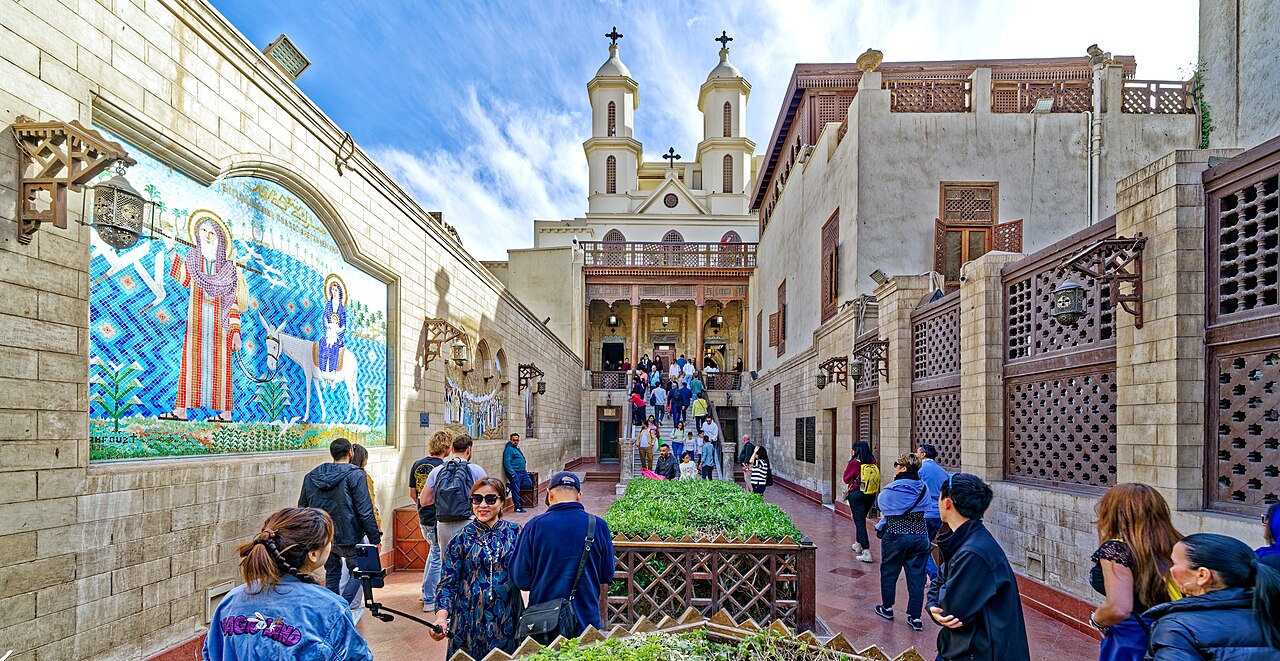
The Hanging Church in Cairo. By Holger Uwe Schmitt (Wikimedia Commons)
Religious heritage is often approached through the lens of individual monuments: a church, a mosque, a monastery, or a shrine, carefully documented, protected, and restored as an object of historical and spiritual value. While this approach has been fundamental to protecting sacred architecture worldwide, it increasingly reveals its limitations. Many religious sites do not exist, and never have existed, in isolation. They are part of wider spatial, social, and ritual systems that extend across territories, connect communities, and evolve over time.
In recent years, I have become increasingly interested in reframing religious heritage not as a collection of static sacred sites, but as living cultural routes and landscapes. This shift in perspective opens new possibilities for understanding, protecting, and revitalising religious
heritage in ways that are socially inclusive, spatially coherent, and economically sustainable.
Sacred places derive their meaning not only from architecture or artistic value, but from movement, memory, and collective practice. Pilgrimage, procession, seasonal rituals, and everyday devotional acts generate spatial patterns that often extend far beyond the boundaries of a single site. Roads, rivers, desert paths, villages, rest points, markets, and landscapes become part of the sacred experience. Yet heritage management frameworks frequently fragment these systems. One shrine may be restored while the surrounding settlement deteriorates; one monastery may be promoted for tourism while access routes remain unsafe or poorly interpreted. This fragmentation weakens both heritage protection and community engagement and reduces its social value. Viewing religious heritage as a connected spatial system, rather than isolated monuments, allows us to address questions of continuity, access, meaning, and resilience more effectively. It also aligns closely with contemporary international discussions on cultural landscapes, cultural routes, and people-centred heritage approaches.
Cultural routes offer a powerful framework for understanding religious heritage. Unlike conventional heritage listings, routes emphasise movement, sequence, and relational value. They recognise that meaning emerges through connections and activities between places, narratives, and communities, rather than through singular objects. Religious routes are among the oldest cultural routes in human history. From pilgrimage paths in Europe and Asia to sacred journeys in Africa and the Middle East, these routes shaped settlement patterns, economies, and cultural exchange. They also created layered landscapes where religious, social, and economic life were deeply
intertwined.
Approaching religious heritage through cultural routes allows us to ask new design and planning questions: How do sacred narratives unfold spatially? How do different communities interact with the same route in different ways? How can contemporary interventions support pilgrimage, worship, and everyday life simultaneously?
One of the most compelling examples of a religious cultural route is the Holy Family Trail in Egypt, which traces the journey traditionally believed to have been taken by the Holy Family during their stay in the country. Stretching across multiple regions, from Sinai to the Nile Delta to Upper Egypt, the trail encompasses churches, monasteries, wells, caves, villages, agricultural landscapes, and urban quarters. Despite its exceptional spiritual and historical significance, the trail has often been treated as a series of disconnected stations. Development initiatives tend to focus on individual churches or monasteries, while broader spatial continuity, community integration, and regional differentiation receive less attention.
My research approaches the Holy Family Trail as a multi-scalar religious landscape rather than a linear itinerary. As illustrated in Figure 1, the Holy Family Trail can be understood as a multi-scalar religious landscape structured through differentiated station typologies and a coherent multi-modal mobility framework. Each station along the route functions differently: some serve as gateways, others as transitional points, and others as core sacred destinations. Each context has distinct spatial capacities, social structures, and development pressures. Recognising these differences is crucial. A one-size-fits-all intervention strategy risks erasing local identity and overwhelming fragile contexts. Instead, design-led frameworks can help tailor interventions that respect spiritual significance while responding to local needs.
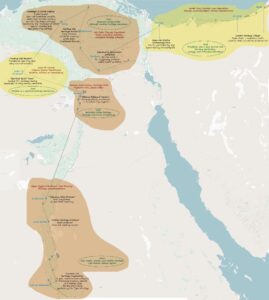
Figure 1 Design-led framework mapping the Holy Family Trail as an integrated cultural route, connecting spatial hierarchy, mobility systems, and locally grounded development approaches. (by author)
Architecture and urban design play a critical mediating role in religious heritage. Design is not limited to buildings; it includes pathways, thresholds, public spaces, signage, resting areas, service hubs, and interfaces between sacred and everyday life. Such design-led interventions can also generate meaningful points of attraction, engaging local communities while carefully welcoming external visitors, without reducing religious heritage to a purely touristic product.
In my work, I treat design as a strategic tool, not merely a formal exercise. It becomes a way to: Enhance legibility, continuity, and multi-modal mobility along religious routes, accommodating walking, cycling, vehicular access, and other context-appropriate modes of movement, while ensuring safe, inclusive, and meaningful engagement with sacred landscapes for users of different ages and abilities. Promote inclusive, intergenerational engagement, welcoming elderly users, people with disabilities, youth, and children into religious heritage environments.
Empower host communities socially and economically by building on local skills, crafts, and lived knowledge. Strengthen local dignity and belonging, while enhancing national awareness of community-based religious heritage potential. As illustrated in Figure 2, local crafts and agricultural knowledge systems along the route highlight the potential of design-led heritage frameworks to integrate community skills into religious and cultural landscapes.
Crucially, this approach places local communities at the centre of heritage sustainability. Religious heritage survives not only through conservation policies but through daily care, use, and identification. When communities see tangible benefits, social, cultural, and economic, they become active custodians rather than passive observers, which ensures sustainability.
 Figure 2: (a) Traditional Khayamiya textile craftsmanship in Minya, reflecting locally embedded skills and visual heritage that (a) (b) (c) can be reactivated through religious and cultural routes to support community-based economic development. (soot-elminya.com); (b) Local pottery production in Asyut, representing vernacular knowledge and artisanal practices that form part of the living cultural landscape surrounding religious heritage routes. (albawabhnews.com); (c) Sakha Agricultural Research Station as an example of place-based agricultural knowledge and rural heritage, highlighting the role of local expertise in strengthening socio-economic resilience along cultural and religious routes.(elwatannews.com)
Comparative analysis with internationally recognised religious and cultural routes offers valuable insights. Routes such as the Camino de Santiago demonstrate how layered governance structures, phased mobility systems, and diversified service ecosystems can support both spiritual experience and regional development. However, transferability must be approached critically. Climatic conditions, socio-economic realities, governance capacities, and cultural practices vary widely. The goal is not replication, but adaptation: extracting principles and reworking them within local contexts. These principles often include: Hierarchies of movement and stopping points, distributed service networks rather than concentrated tourism hubs, clear spatial sequencing that supports narrative experience, and long-term governance models involving multiple stakeholders.
Religious heritage faces mounting challenges: urban expansion, environmental stress, economic pressure, and changing patterns of worship and visitation. Addressing these challenges requires moving beyond monument-centred protection toward integrated heritage systems. Cultural routes provide a framework that is particularly well suited to religious heritage because they acknowledge continuity, movement, and lived experience. When combined with design-led thinking and genuine community participation, they can transform religious heritage into a catalyst for regeneration rather than a burden on fragile contexts.
My ongoing work seeks to contribute to this shift — academically, professionally, and through applied research, as well as through voluntary engagement with international heritage networks such as Future for Religious Heritage and ICOMOS. By bridging architectural history, spatial design, and community engagement, religious heritage can be protected not only as memory but as a living, evolving part of contemporary life.
By Dr. Maha AbouBakr Ibrahim
Assistant Professor of Architecture Engineering | Heritage Researcher & Consultant
Dr. Maha AbouBakr Ibrahim is an Assistant Professor of Architecture Engineering, heritage researcher, and consultant specialising in architectural history, religious heritage, and cultural routes. Her work focuses on design-led, people-centred approaches to heritage revitalisation, with particular interest in religious landscapes, community engagement, and sustainable development. She actively contributes to international heritage networks through research, practice, and voluntary professional engagement.








Follow us: